

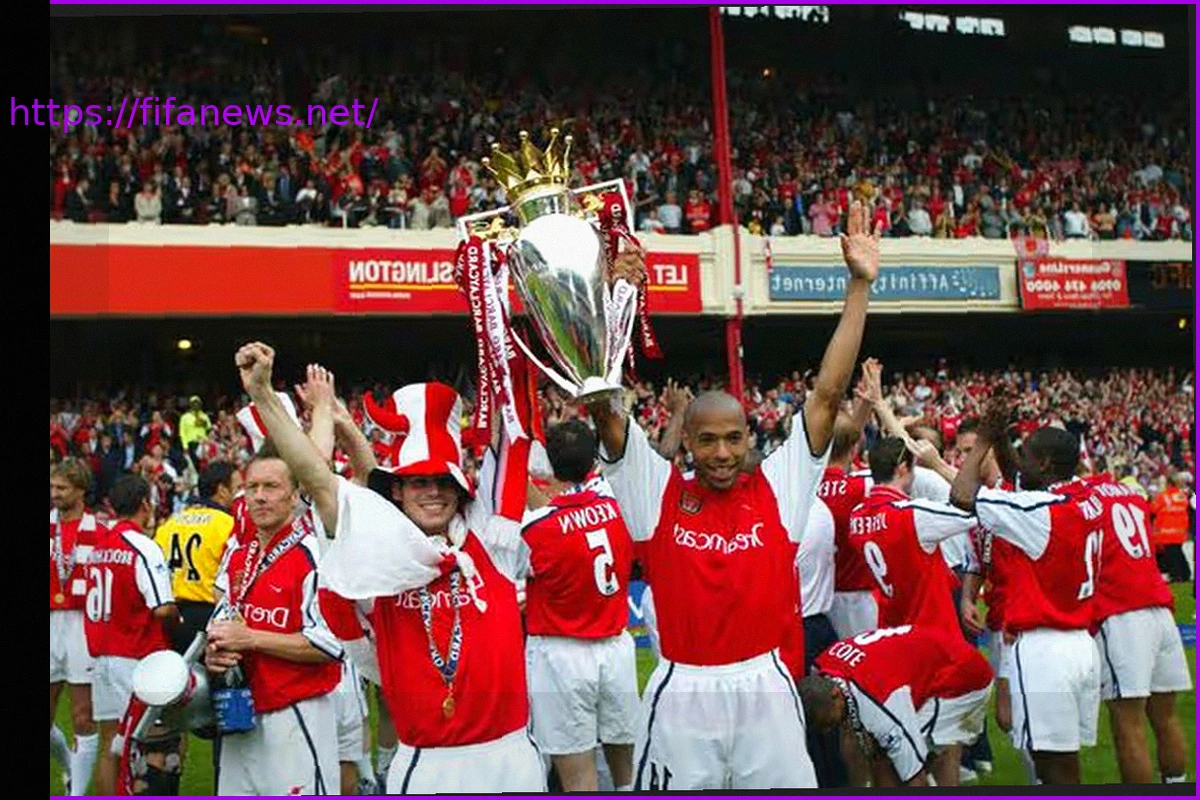
Recognized globally as one of football’s most competitive and influential leagues, the Premier League, with its rapid tempo, physical demands, and diverse international talent, serves as a crucial testing ground for top-tier athletes. While achieving success within England is a significant accomplishment, an even more exceptional feat is winning the FIFA World Cup while contracted to a Premier League club. Throughout history, a distinguished roster of players has successfully combined their club commitments with international triumphs, securing their place in football lore.
France 1998: The Early Premier League Influence
Reflecting on past tournaments, the 1998 FIFA World Cup saw an early group of Premier League stars achieve victory when France clinched the title at home. Arsenal contributed significantly to Les Bleus’ success, with midfielders Patrick Vieira and Emmanuel Petit instrumental in their triumph. Their commanding presence in the midfield, characterized by a blend of power and tactical acumen, mirrored Arsenal’s domestic strength. Chelsea’s Frank Leboeuf also celebrated the win, underscoring the increasing prominence of Premier League players on the global football scene during that era.
Spain 2010: Technical Brilliance Meets English Football
By 2010, this pattern persisted as Spain’s golden generation claimed their inaugural World Cup. Arsenal’s Cesc Fàbregas and Liverpool’s Fernando Torres were key members of the victorious Spanish side. Although Torres’s impact in the tournament was more subdued than his stellar Euro 2008 performances, Fàbregas was pivotal, notably providing the assist for Andrés Iniesta’s unforgettable winning goal in the final. Their achievement illustrated that players accustomed to the technical, possession-oriented style could still excel while regularly competing in England’s notoriously physical league.
Germany 2014: A Blend of Power and Precision
Germany’s victory in Brazil in 2014 further showcased the Premier League’s reach. Arsenal again had strong representation, with Mesut Özil and Per Mertesacker playing central roles. Özil’s creative flair and exceptional vision were vital throughout the competition, while Mertesacker provided crucial leadership and defensive solidity. Chelsea’s André Schürrle also left his mark, most notably by scoring a brace in the memorable 7-1 semi-final thrashing of Brazil. These performances highlighted the Premier League’s status as a breeding ground for top-tier talent ready to excel on football’s grandest platforms.
France 2018: Premier League Stars Take Center Stage
When France lifted the trophy again in 2018, the Premier League’s influence was more pronounced than ever. Chelsea’s N’Golo Kanté and Olivier Giroud, alongside Manchester United’s Paul Pogba, were pivotal to France’s triumph. Kanté garnered widespread acclaim for his relentless energy and defensive mastery, while Pogba delivered a commanding display in the final, netting a vital goal. Giroud, despite not scoring, offered invaluable link-up play and tactical discipline. Tottenham Hotspur’s Hugo Lloris captained the team, bringing vital leadership and calm from between the posts. Manchester City’s Benjamin Mendy was also a squad member, contributing to a tournament that underscored the vast pool of talent in the Premier League.
Argentina 2022: A New Generation Rises
The 2022 World Cup in Qatar solidified this pattern, especially during Argentina’s victorious run. With five players from Premier League clubs in their ranks, this represented the most recent and perhaps most compelling illustration of the league’s global impact. Aston Villa’s Emiliano Martínez shone as a tournament hero, making critical saves in both the semi-final and final. His decisive penalty shootout performance against France indelibly marked his status as a World Cup-winning custodian.
In defense, Tottenham Hotspur’s Cristian Romero and Manchester United’s Lisandro Martínez formed a formidable partnership, injecting tenacity and composure that proved vital in Argentina’s high-stakes encounters. Brighton & Hove Albion’s Alexis Mac Allister was a breakout star in midfield, showcasing a blend of calm possession and astute positioning. Upfront, Manchester City’s Julián Álvarez captivated with his dynamic energy and prolific goal-scoring, becoming a crucial attacking partner for Lionel Messi.
The Expanding Reach of the Premier League
This particular cohort’s significance lies not merely in their achievement but also in the wide array of clubs they represented. Spanning from established powerhouses such as Manchester United and Chelsea to rising clubs like Brighton and Aston Villa, the Premier League’s footprint now reaches well beyond a select group of top-tier sides. This diversity underscores the league’s considerable depth and its proficiency in drawing in and nurturing talent across its spectrum.
A League That Shapes World Champions
< p>Reviewing these five World Cups – 1998, 2010, 2014, 2018, and 2022 – a distinct trend emerges. The Premier League has undeniably become a primary crucible for future World Cup victors, providing an environment for players to hone their skills, engage in fierce competition, and prepare for the apex of international football. The league’s worldwide prominence also ensures that these athletes bring their club-level insights and experiences to the global arena, shaping both playing philosophies and tactical innovations.
Ultimately, securing the World Cup while part of a Premier League club signifies both remarkable individual prowess and the league’s inherent quality. As football’s global integration deepens, it appears increasingly probable that future World Cup champions will continue to emerge from England’s premier division. For supporters, this brings an added dimension of pride – the knowledge that their weekly club heroes possess the caliber to achieve global football supremacy.