

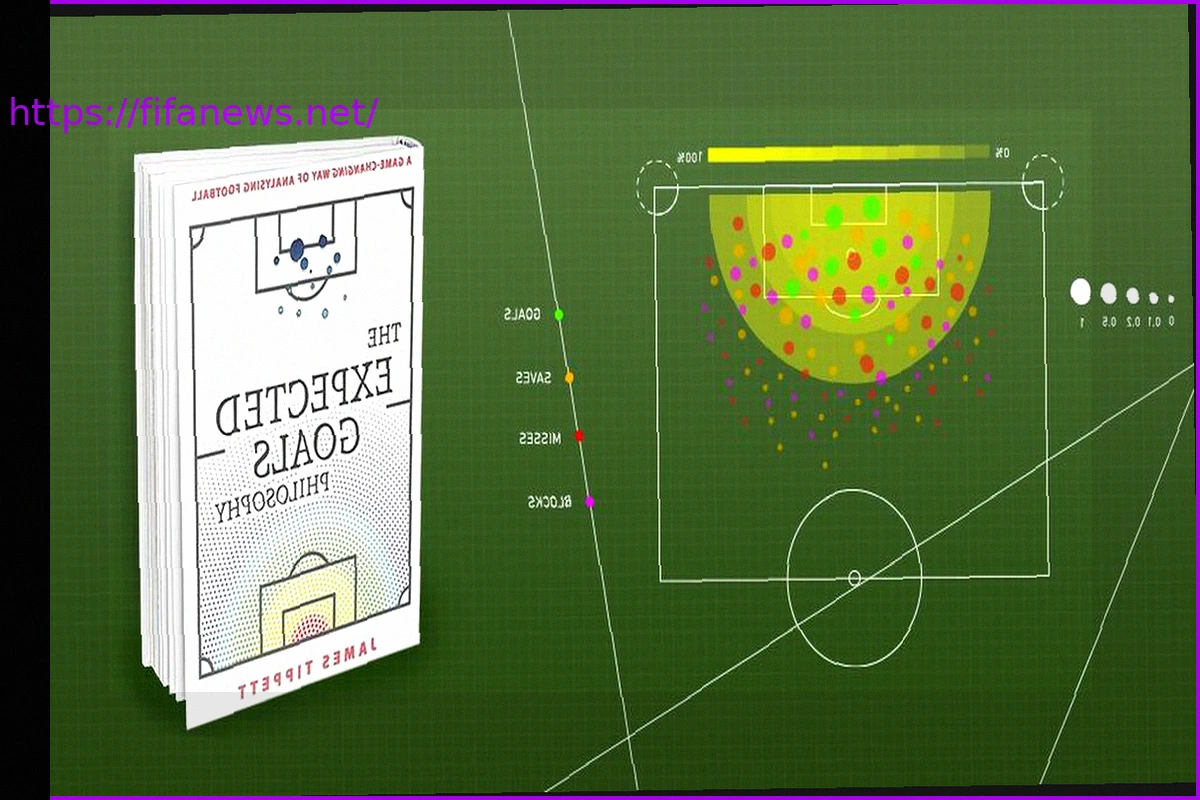
Expected Goals (xG) has profoundly reshaped how football analysts, coaches, and fans assess attacking performance over the past decade. Designed to quantify the quality of goal-scoring opportunities, xG assigns a probability to each shot, indicating its likelihood of resulting in a goal. For instance, a close-range tap-in might have a high xG of 0.8, whereas a speculative long-range strike could be as low as 0.05.
Despite its pivotal role in modern football analysis, xG faces considerable criticism. From coaches cautious about over-reliance on statistics to fans questioning its practical application, xG is not universally accepted. This article explores the primary criticisms directed at this widely cited metric.
Key Criticisms of Expected Goals
The main criticisms of xG typically revolve around its tendency to oversimplify, issues with small sample variance, and limitations in capturing context. Here’s a summary:
| Criticism | Explanation | Counterargument |
|---|---|---|
| Oversimplifies the game | Reduces football to statistics, neglecting tactical depth, off-ball movement, and individual creativity. | Valuable for long-term trend analysis; serves as a complement, not a replacement, for qualitative assessment. |
| Different xG models yield varied results | Models from Opta, StatsBomb, Wyscout, etc., use distinct algorithms. | While models differ, overall seasonal trends are consistent; discrepancies diminish over larger datasets. |
| Ignores context and game state | High or low xG in critical or desperate situations can misrepresent team performance. | Contextual metrics like xGA (expected goals against) and analysis of shot quality over time can provide added nuance. |
| Misrepresents finishing ability | Does not fully account for exceptional strikers or players with poor finishing. | Best used for team-level evaluation; individual finishing skill can be assessed alongside xG. |
| High variance in small sample sizes | Single-game xG statistics can be misleading. | Most effective when analyzed across full seasons or multiple matches. |
| Ignores defensive quality | Primarily focuses on attacking aspects, underplaying defensive tactics. | xGA and other defensive metrics can supplement xG for a more comprehensive view. |
1. xG Can Oversimplify the Game
One of the most frequent criticisms is that xG reduces the inherent complexity of football to mere numbers. Critics argue that football encompasses far more than just chances; it involves intricate tactical intelligence, intelligent off-ball movement, bursts of player creativity, and crucial game context—elements that a simple xG value often fails to capture effectively.
For example, a goal from a seemingly low xG chance might be the culmination of a brilliant individual effort or a perfectly timed, incisive run. Conversely, a high xG opportunity that is missed might reflect not just poor finishing, but the immense pressure of a pivotal match moment. Analysts like Michael Cox have suggested that an excessive reliance on xG risks prioritizing the quantity of opportunities over the qualitative aspects of play, potentially overlooking the subtleties that make football so compelling.
2. Different xG Models Yield Different Results
Another significant critique is the lack of standardization for xG. Various analytics companies—including Opta, StatsBomb, and Wyscout—each employ distinct algorithms and weighting factors. Some models incorporate variables like player position, defensive pressure, and shot type, while others might primarily consider distance and angle to goal.
This variance means that the identical match can generate different xG totals depending on the model used, raising questions about overall consistency and reliability. Critics contend that while xG can indicate broader trends, it should not be treated as an exact, definitive measure of performance, especially when attempting cross-comparisons between leagues or teams that rely on different data providers.
3. Context and Game State Are Often Ignored
xG models typically evaluate shots in isolation, often without adequately considering the broader context of a game. For example, a team trailing by three goals late in a match might resort to taking numerous low-quality, desperate shots, each with a minuscule xG. These accumulated xG values may not accurately reflect the team’s overall attacking ability or tactical approach throughout the majority of the game.
Similarly, tactical context is crucial. A team with high possession dominating a weaker opponent might generate substantial xG totals, yet this doesn’t automatically equate to superior skill or strategic prowess in all scenarios. Critics argue that without accounting for match state, psychological pressure, and specific game circumstances, xG can present a skewed or incomplete picture of actual performance.
4. It Can Misrepresent Finishing Ability
One of the most frequently cited limitations of xG is its inability to fully account for a player’s inherent finishing skill. Elite strikers consistently outperform their expected goals, demonstrating a clinical edge, while others consistently underperform. This discrepancy can lead to misleading interpretations:
- Overvaluing underperforming strikers: A forward who routinely misses high xG chances might be perceived as merely unlucky, even if their finishing technique is genuinely poor.
- Undervaluing elite finishers: Players such as Erling Haaland or Mohamed Salah frequently convert low xG chances at a rate significantly exceeding statistical expectation. Relying solely on xG could inadvertently diminish recognition of their exceptional clinical ability.
Critics suggest that while xG is an excellent metric for evaluating team-level attacking performance, it should not replace nuanced qualitative assessments of individual player skill.
5. High Variance in Small Sample Sizes
xG is most reliable and insightful when applied to long-term datasets, such as an entire football season. In contrast, its application to small sample sizes—like individual matches or short tournaments—can be prone to extreme variance. A team might generate a high xG in a single game but fail to score due to an inspired goalkeeping performance, exceptionally poor finishing on the day, or simply bad luck.
This issue is particularly problematic in media narratives, where single-game xG statistics are frequently misinterpreted. Fans, upon hearing their team “should have scored five goals,” may feel unfairly treated, even if the actual game outcome was a realistic reflection of events. Critics emphasize that xG functions as a trend indicator, not a deterministic predictor, and using it for isolated match judgments can mislead casual audiences.
6. Ignoring Defensive Quality
xG primarily focuses on evaluating attacking events, often to the detriment of fully capturing the defensive context. A team that consistently allows a low xG might be executing brilliant defensive organization and tactical discipline, aspects that traditional xG models do not always explicitly highlight. Conversely, conceding goals from high-xG chances could be attributed to “bad luck,” when in reality it might stem from poor defensive positioning or systemic tactical errors.
While some advanced models attempt to incorporate xGA (expected goals against), even these comprehensive metrics struggle with the intricate interplay of defensive tactics, pressing schemes, and goalkeeper skill, which complicates a complete interpretation. Critics underscore that xG, when used in isolation, cannot fully capture the multifaceted defensive side of football.
Conclusion: xG is Powerful, but Not Perfect
Expected Goals stands as an undoubtedly revolutionary tool in contemporary football analysis. It empowers teams, analysts, and fans to objectively measure the quality of chances created and conceded, thereby helping to identify underperforming or overperforming teams relative to their opportunities.
However, critics rightly caution against an over-reliance on this metric. xG is not a substitute for comprehensive qualitative analysis, understanding game context, or applying human judgment. Its inherent limitations—including significant variance in small samples, inconsistencies across different models, and an inability to fully capture individual finishing skill or nuanced tactical play—mean it should always complement, rather than replace, traditional scouting and analytical methods.
In essence, xG offers a valuable lens through which to view football, but it is far from the complete picture. Acknowledging and understanding its limitations helps enthusiasts appreciate the profound depth and complexity of the sport beyond mere numbers, preventing oversimplified narratives about “luck” or “underperformance.”