

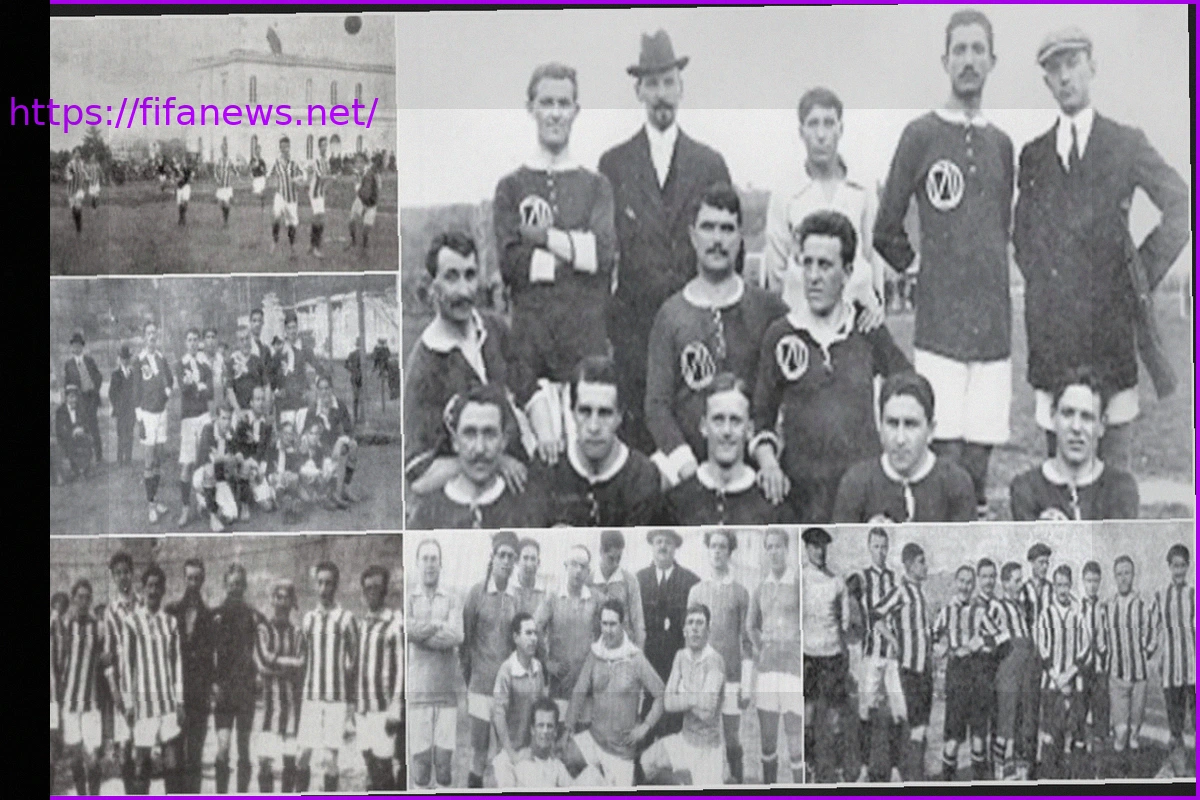
The story unfolds with the Naples football club, where a rich linguistic tapestry of English, Swiss, Danish, and Neapolitan speakers coexisted. After six years, the initial harmony gave way to irreconcilable differences. A faction of members decided to part ways, driven by the ambition to establish a new football society.
Among these pioneers were figures like Hector Bayon, Adolfo Reichlin, Francesco Dresda, Augusto Barbati, and the Swiss Emil Steinegger—an imposing 1.90-meter central defender renowned for his constant on-field grumbling (“He always has the ball between his feet, pass it a bit, holy devil!”). Also instrumental were Paolo Scarfoglio and, most significantly, Luigi Stolte. Stolte, a rowing champion and the leader of this secession, assumed the presidency of the newly formed club, a role he had long coveted, while Hector Bayon took on the position of sports director.
The original Naples club, however, did not view this split with alarm. Under the leadership of president Emilio Anatra, the team was reorganized, placing a greater emphasis on local Neapolitan talent. The refreshed roster included engineering student Guido Cavalli in goal, defenders Gaetano Del Pezzo di Caianiello (who would later become a university professor of projective geometry), Mario Argento on the left wing (a fencer, cyclist, and future journalist), fine arts student Carlo Garozzo, the marquises Paduli, and the three Bruschini brothers.
Internazionale Born in 1911: A New Rivalry Ignites
From the heart of the Naples club’s schism, and with the tantalizing prospect of fiery city derbies, Internazionale was founded in 1911, becoming the second prominent football team in the city. They adopted a distinctive midnight blue jersey, earning them the nickname “dark blues,” complemented by a crisp white collar. Their home ground was established in Agnano—a fenced facility with an entrance fee of fifty centesimi and a dedicated changing room.
In response, Naples also relocated from its pitch on Via Campegna, settling on the shooting range grounds in Agnano. This move brought them geographically closer to their new rivals, intensifying the burgeoning competition. Internazionale proudly presented itself as “a company of aristocrats with a sprinkling of Swiss and English.” Their squad featured notable players such as Pepè Cangiullo in goal, a champion diver both in water and within the penalty box; the Duke of Serracapriola, a lightning-fast right-winger; and the half-backs Gennaro Fermariello, who would later become the mayor of Naples, and Alfredo Pattison, a talented engineer and rower of English descent.
Internazionale quickly began to rack up successes, threatening to eclipse the established star of Naples. Their debut match on November 5, 1911, saw them defeat the sailors of the English ship “Romanje” with a score of 3-1. The regional championships soon provided the much-anticipated stage for the inaugural derby between these two burgeoning Neapolitan football powerhouses.