

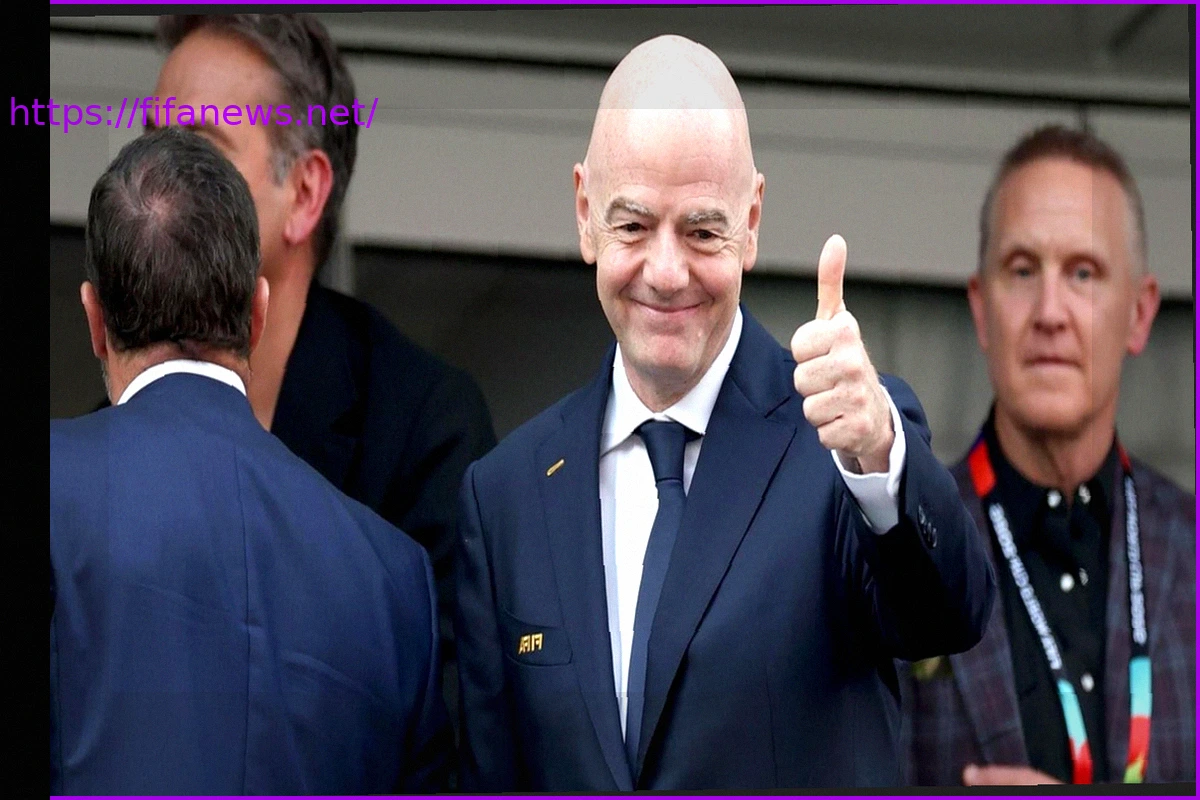
FIFA President Gianni Infantino recently addressed the absence of the Italian national team from the World Cup. His comments have sparked discussion and require a closer look.
In Depth
The FIFA President, Gianni Infantino, has shared his perspective on the Italian national football team’s failure to qualify for the World Cup. This situation, which has understandably caused considerable disappointment among Italian football fans, was acknowledged by Infantino. While not directly criticizing the team or specific decisions, his remarks touched upon the competitive nature of modern football and the increasing difficulty for any nation to secure a spot in the prestigious tournament. He emphasized that the level of competition has risen significantly across the board, making qualification a challenging feat for even traditionally strong footballing nations.
Infantino’s statements can be interpreted as a broader reflection on the global landscape of football. He highlighted that while Italy possesses a rich footballing history and a passionate fanbase, the modern era demands consistent excellence and adaptability. The qualification process for the World Cup is a rigorous one, involving intense competition within continental confederations. The fact that Italy, despite its past successes, has missed out on recent World Cups underscores the evolving dynamics of international football. His comments serve as a reminder that past glories do not guarantee future participation, and continuous effort and strategic planning are paramount for sustained success on the world stage.
English Translation:
FIFA President Gianni Infantino has recently spoken about the Italian national team’s non-qualification for the World Cup. His statements have generated considerable discussion and warrant a detailed examination.
In Depth
FIFA President Gianni Infantino has offered his viewpoint regarding the Italian national football team’s inability to secure a place in the World Cup. This development, which has naturally led to significant disappointment for Italian football supporters, was acknowledged by Infantino. While refraining from direct criticism of the team or particular choices, his remarks alluded to the heightened competitiveness of contemporary football and the escalating challenge for any country to earn a berth in the esteemed competition. He underscored that the standard of competition has markedly increased universally, rendering qualification a formidable task even for nations with a strong footballing pedigree.
Infantino’s statements can be perceived as a wider contemplation of the international football scene. He pointed out that while Italy boasts a profound footballing heritage and a devoted following, the current era necessitates unwavering excellence and the capacity to adapt. The World Cup qualification process is inherently demanding, entailing strenuous competition within continental federations. The circumstance of Italy, notwithstanding its past triumphs, failing to participate in recent World Cups emphasizes the shifting dynamics of international football. His comments serve to reiterate that historical achievements do not guarantee future involvement, and persistent effort and strategic foresight are indispensable for enduring success at the global level.